The moment arrived.

Earth accepted rain
A rose accepted sunlight
Air accepted sound.
A white dress hanging
He accepted her kiss.
The moment arrived.
Earth accepted rain
A rose accepted sunlight
Air accepted sound.
A white dress hanging
He accepted her kiss.
Rain draws green from the lawn
Daffodils shoots rise, crocuses cluster;
Feet bare.
Maple buds fall, some to soil.
The dust of red roses.

You run
Gather wet hair behind your head.
White dress clings.
Knees muddy, fingers brown with moist soil
Where you planted life and love.
The wind softens

You finger the light spring rain off a fresh maple bud.
A new white crocus leaves yellow dust on your chin
A petal on a shoulder.
The elegance of you
The challenge of you.
Your being fills the warming air.
Eyes open, breathing deeply.
The world tastes your love and moans.
While the big thinkers are plotting action against Trump and his minions (or pulling their hair out) on Feb. 4 about 100 residents of Hunterdon County, N.J., challenged their very Republican county board to stand up to the Trump ordered ICE raids, like the one in Newark, where people were detained without warrants, including an American from Puerto Rico and an Army veteran
The county greeted Newark Mayor Ras Baraka and leaders of the Hunterdon County NAACP who presented the county commissioners with a request to write a resolution in opposition to the ICE raids and to commit that Hunterdon county law enforcement would not support the federal raids, which they said violate the constitutional right against unlawful search and seizure.
Hunterdon County is an interesting place for such a gathering. It is very rich – the 13th richest county in the U.S. and very Republican.

In 1776, Trenton, where Washington ambushed the Brits, was part of Hunterdon County.
The Hunterdon commissioners are not a bad governing body. It has a lot of money to play with – the property values upon which they base their taxes rise by a millions each year. It is a county government with no debt, and which over the past two years used $24 million from Biden’s American Rescue Plan to help nonprofits and municipalities with numerous projects.
The county also built its first all-inclusive playground and planned a second.
Then, for old times sake and habit, they voted for Trump and the entire GOP team.
Two of the commissioners who faced the residents on Feb. 4 a up for re-election this year and were counting on floating to victory on the crests of the great Trump economy .
Then came the raids, and Trump firing the FBI and USAID, closing down medical and science websites, releasing insurrectionists from Jan. 6 and starting what even the Wall Street Journal called the dumbest trade war ever and allowing Elon Musk and his crew to illegally mess about inside the US Treasury and government personnel files.
So, even then, came the residents.
Wives of immigrant husbands. Husbands of immigrant wives. Jewish granddaughters of Holocaust victims. Business owners whose families came decades ago for the American dream. Business owners afraid for their immigrant workers. Mothers of school kids afraid for their dark skinned friends. Grandsons of Italian grandparents who were harassed and discriminated against because they didn’t speak English. Sons of parents in nursing homes whose staff are hiding. Gay mayors; Hispanic borough councilmen; LGBTQ advocates.
Americans.
Crying, pleading. Resolute.
And angry
Angry
Angry.
Angry at what they see their country becoming.
Angry enough to act.
Angry enough to tell their commissioners to do their job: Live up to their oath of office that had them swear to uphold the constitution.
Do your duty, or maybe, just maybe, quit.
One small meeting in one small town.
But Concord was a small town.
So was Trenton.
And so is Flemington, N.J.
They came to stand in the old courthouse and said, loudly, NO.
The word that starts revolutions.
One stood.
And said no.
Two followed.
Voices raises.

Said
This is not yours to have.
It is ours.
Together.
One stood
And said
Bring these to me.
These hurt and tossed.
Two followed
And said yes,
Come to me
I know your path to this place:
I have walked it.
One stood
And said sing.
There are notes and words for all.
Two said yes.
Then three
Just crossing the room,
Crossing that gray room with brown walls;
Just gazing, eyes soft and teasing, yet fearful;
Just speaking, listening, nodding, smiling;
With the mystery of a guitarist spotlighted,

head bent to strings, drawing love and anguish through flashing fingers
or a singer rising through sounds seeking the purity of a note
that splits your soul, leaves you breathless;
That moment.
It is that moment.
It is that moment when.
Shaking, dreaming, desiring
Change burst.
Dancing, leaping, screaming, joyous, shattering.
Memory burned to knowledge
That it was you who brought the light
And left it there for me to wonder.
For the third time, I am honored and privileged to have a story selected for publication in a Greater Lehigh Valley Writers Group anthology.
The new anthology is due out in the spring.
The long-standing group produces a members written anthology based on a writing prompt every other year. Hats off to the organizers and editors of the anthology.
This year’s prompt was “WRITING A WRONG,” which kicked off a furious discussion among member about the meaning of the prompt.
It was not RIGHTING a wrong,” but WRITING a wrong, so a story about some wrong committed somewhere by someone. It was a challenge because we really want to write “hero” stories, that is righting a wrong, not a story about something that is a wrong.
My story is called “MISS AGNES WHITNEY HALL DIED AT AGE 83.”
The title comes from a newspaper headline I saw on Facebook in a collection of weekly newspaper pages from Oswego County/Fulton N.Y., where I lived for a while, being digitized for preservation. I jotted the headline down for some reason.
The story I wrote takes elements from the 1960s Civil Rights movement, a time when I was teenager, the U.S. interstate highway system, an environmental issue, and the loss of a black neighborhood in a predominantly white city.
Addressing these issues in the story is Cassie Taylor, a mid-20s black newspaper reporter who is shaken out of her self-satisfied lethargy – she wants to be famous but not to work for it. The discovery of Agnes Whitney Hall’s life gives Cassie a chance to “write a wrong,” even as part of the wrong is her own.

In the 2023 Anthology WRITING ACROSS AMERICA I was honored to have selected my story, THE PIANO PLAYER’S GIFT.
The story includes a rapid road trip from Central Maine to Boston and poses the question: What happens when Dan finds out that his silent, withdrawn and dead for a decade grandmother left him her house and that in her youth played piano is a strip club.
The elements of this story are based on my life. When I worked in Central Maine we often took daylong trips to Boston for theater, visits or baseball games. The travel portions of this story reflect those trips.
The other part, the grandmother, is based on a photo of my own grandmother. She is standing in a kitchen with an expression of loss and fear on her face. She was suffering from dementia in a time before Alzheimer’s was even a common term for the condition. Best to my knowledge, though, she did not play piano in a strip club.
Find the collection here:
Also look for the award-winning 2021 edition:
The Greater Lehigh Valley Writer’s Group has received word that the 2021 Anthology “Writes of Passage” was awarded First Place in the 2022 Bookfest contest.
I was honored to have my short story DANNY’S B-29 selected for the anthology.
It’s the story about a teen-ager left alone to build a swimming pool in his backyard with cement blocks, a few bags of cement and blue paint. The effort to build the pool brings out harsh memories about his best friend, Danny. The pool becomes a memorial to his friend.
For this story, the swimming pool is real. When I was 14 or 15, my friend Jimmy Morrison and I found ourselves trying to construct an inground swimming pool out of a large hole in the ground, some cinder blocks and cement.
Writers beware!
There is a lot to see and do at the annual Greater Lehigh Valley Writers Group conference, The Write Stuff.
This year the event will be held from March 13 to 15.
And we have a splashy new location:
Homewood Suites by Hilton Allentown Bethlehem
Center Valley — Extended stay hotel
3350 Center Valley Parkway
Center Valley, PA 18034

Come to learn, come to laugh, come to hangout.
Registration information and details here:
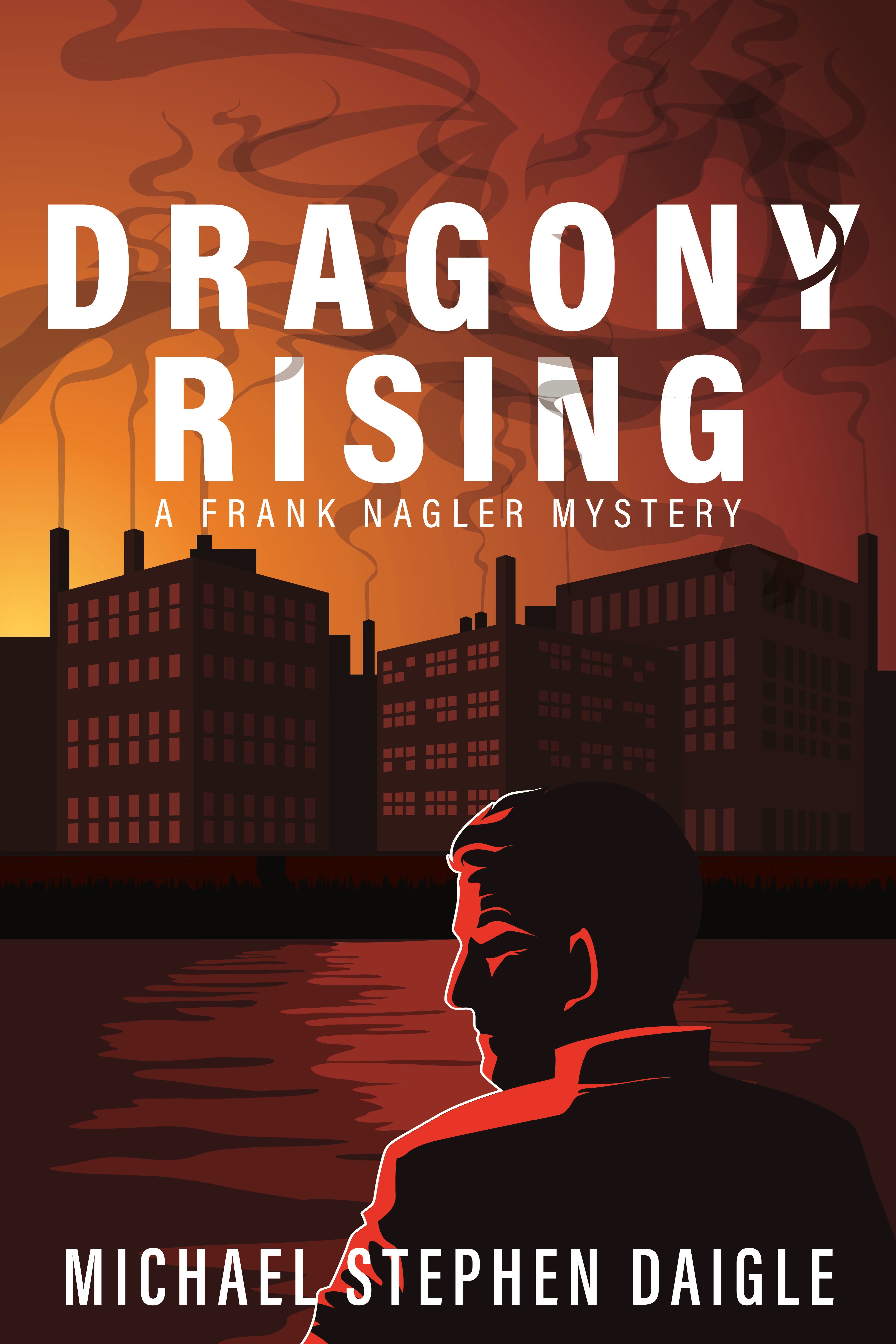
At the center of NAGLER’S SECRET, Book 6 of the Frank Nagler Mysteries, is an incident and investigation from 1995.
At the center of that incident is a woman known as Naomi Baptiste.
Does she hold Nagler’s secret? Or is he Nagler’s secret?
What does this letter, read by Nagler’s companion Lauren Fox in 2021, say about that?

Who did he write the letter to, and why does he still have it?
The letter:
“September, 1995.
I never told you how much you scared me.
There you were walking through the ghetto looking to drag me out of the trouble.
There you were smiling at me, eyes dark and open, face willing and mouth so soft, saying take me.
And you stood there, even as I didn’t.
And there was I mad at the world, either looking for a fight or trying to hide because I couldn’t find the words to tell you how much all that meant. So I walked the dark streets, tripped through the damage, not realizing it was not the world that was damaged, it was me.
And I couldn’t fix either. Which just made me angrier.
The ghetto taught us to be angry, to be suspicious, let us hide in the loneliness and isolation.
No one would know. We could tough it out.
And we fooled ourselves to believe that.
I fooled myself to believe that.
You tried to teach me that was not the truth.
And believed that I could scrape off all that had crusted my heart and soul.
And then you were gone, the lessons incomplete.
Who will help make scrape it all away now?
I stand outside your house broken like me, sit on the crumbling steps and hold a broken board to the porch railing and hope.
Who will hold me to that railing, as I lean and fall?
Whose voice will fill my ear, whose breath will drift across my neck, whose hand will slip between my fingers?
I hear your voice, both soft and husky, the tingle of a laugh, your smile like the sun.
There has to be something more than just pain.
Your Frank.”
Driving in circles.
Past the houses he knew.
The train station, dark and hollow, the train yard grumbling, empty cars, lighted chariots.
The darkness of the ghetto. Broken frames, leaning walls, cries sucked into the air, neither joy nor pain.
Bulldoze it, crush it, grind it to dust.

Burn it.
Nagler shook his head.
Wouldn’t matter.
It’s all about memory. Broken streets, shattered lives. The shrieks of the wounded, the barren, the lost.
Couldn’t create enough fire to destroy it all; it would settle, ash, dust, the scent in the hair of your nose.
A midnight gas station, neon, yellowed and buzzing.
Coffee he didn’t need.
Four roses, red and yellow, plastic wrapped.
The kitchen light still on.
Lauren stretched asleep.
Blankets at her waist.
Roses brushed her spine; pebbled flesh.
Her face turned, one eye open. Half a smile.
This, he thought, is light.